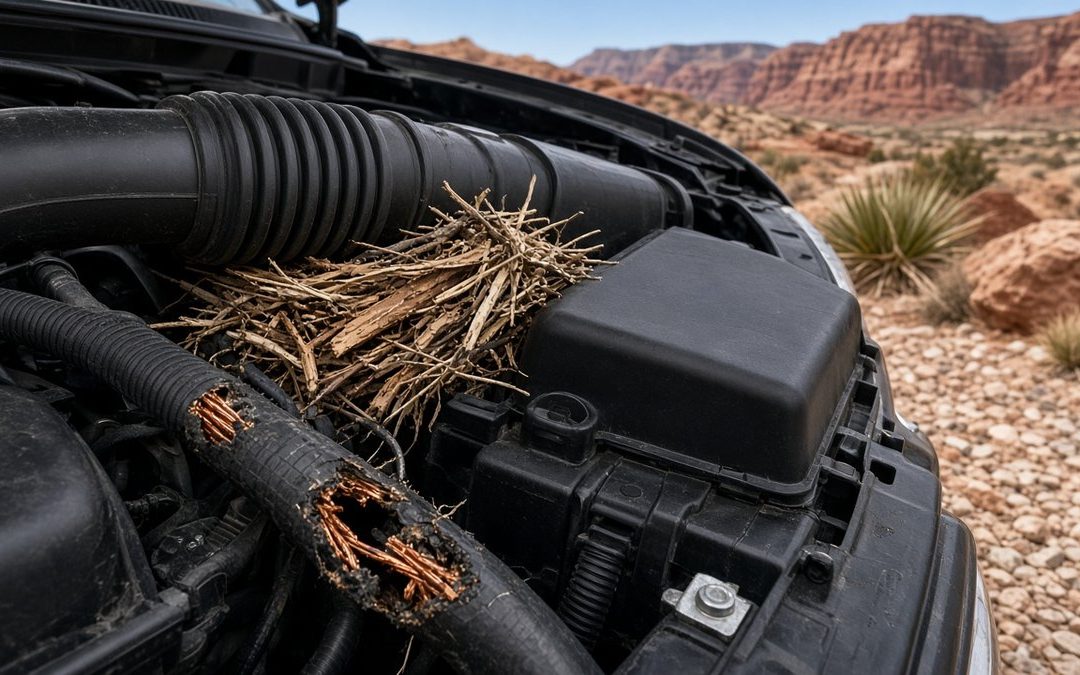
You go to start the truck and the check-engine light comes on. Or it won’t start at all. You pop the hood and find a pile of sticks, bark, and cactus bits packed next to the engine, and the insulation on some of the wires has been gnawed down to bare metal. If you live in Hurricane, that’s a classic case of pack rats chewing car wires. It happens in La Verkin, Toquerville, and Washington too, anywhere homes sit close to open desert.
Here’s how to tell what you’re dealing with, why your car is a target, and what to do about it.
What a pack rat is
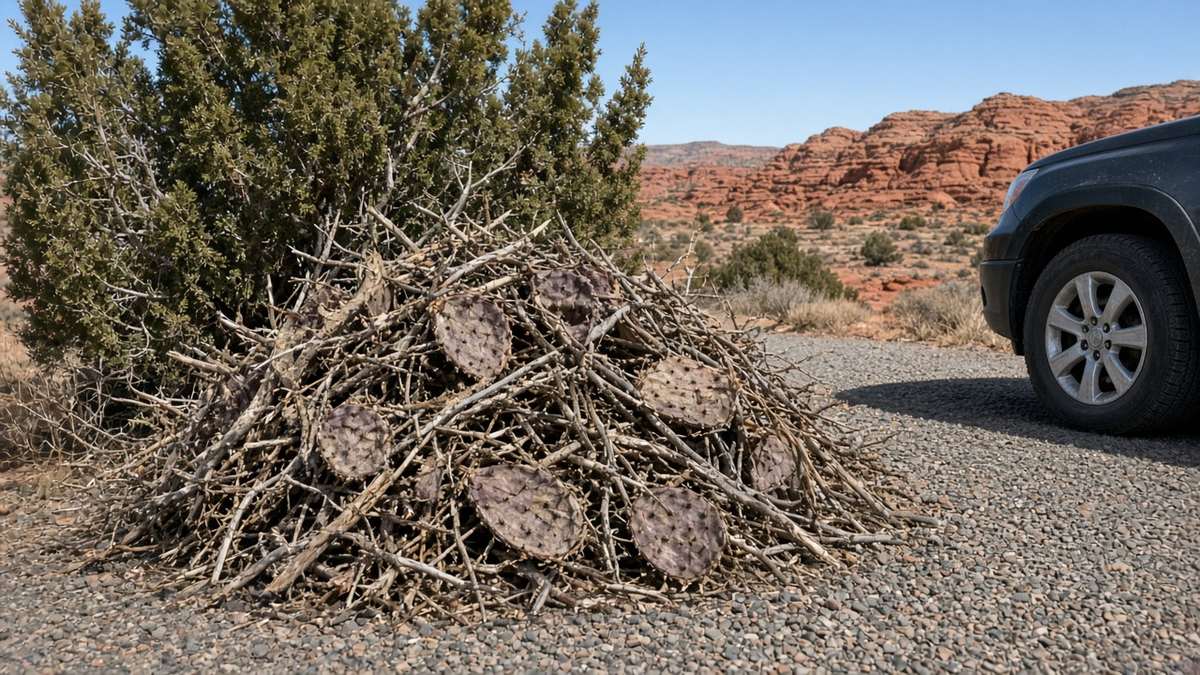
“Pack rat” is the common name for the woodrat. They’re native rodents, and they’re known for building big nests out of whatever they can carry: sticks, juniper bark, dry grass, cactus pieces, and the odd bit of trash. In the desert those nests sit under shrubs, in rock piles, and in brush. Around a house, they sit under sheds, in woodpiles, in a garage that doesn’t close tight, and sometimes inside a vehicle that hasn’t moved in a while.
Hurricane has a lot going for a rodent. New homes go up next to fields and open lots, so the rodents that lived on that ground have a short commute to your driveway. Homes near Sand Hollow, along SR-9, and next to agricultural land see this kind of activity.
Why pack rats end up in your engine
An engine bay is sheltered, out of the wind, and warm after you drive. A car or truck that sits for days, like a second vehicle, a work trailer’s tow rig, a boat truck, or an RV, gives them time to build. Once they’ve moved in, they chew. Rodents’ teeth keep growing, so gnawing is part of life for them, and wire insulation, hoses, and the cabin air filter are easy targets.
The damage isn’t small. Chewed wires can cause warning lights, electrical problems, or a vehicle that won’t start, and the repair has to be done by a mechanic. Talk to your insurance company about whether rodent damage is covered on your policy; coverage varies.
Signs of pack rats chewing car wires
- Sticks, bark, grass, leaves, or cactus pieces under the hood, on top of the engine, or stuffed in the air box.
- Gnawed insulation, bare wire, or chewed hoses.
- Droppings on the engine, battery tray, or in the cabin air filter.
- A musty or urine smell when you run the heater.
- Food stash under the hood: seeds, pet food, or mesquite and juniper pods.
- A stick nest under a nearby bush, shed, or woodpile.
How to keep rodents out of your vehicle
No single trick works by itself. Stack these together:
- Drive it. A car that moves every day is a poor nesting spot. If a vehicle sits, pop the hood and look every few days.
- Park in a closed garage if you can, and make sure the garage itself is sealed: tight door seals, no gaps around pipes, and no open side doors.
- Clear nesting cover near where you park. Woodpiles, brush, junk piles, old tires, and rock piles next to the driveway are prime pack rat real estate.
- Take away food. Store pet food, bird seed, and livestock feed in sealed metal containers. Don’t leave dog food out overnight in the garage.
- Clean out a nest the right way. Wear gloves, wet the nest and droppings with disinfectant, then bag it. Don’t sweep or blow dry droppings around; rodents can carry disease, including hantavirus.
- Have the wiring checked by a mechanic before you drive a vehicle that’s had a nest in it.
One more thing: removing a nest doesn’t end it. If the rodent is still living under your shed or in the brush line, it’ll be back under the hood in a week. That’s why the property matters as much as the car.
When to call a professional
If you’ve found a nest more than once, if you’re seeing droppings in the garage, or if you hear activity in the walls or attic, it’s time for an inspection. The same gaps that let a pack rat into your garage can let mice into the house. Our post on roof rats in St. George covers the higher entry points if the noise is coming from overhead.
Our rodent control service starts with an inspection of the yard, garage, and house. We find where they’re living and how they’re getting in, set professional traps and tamper-resistant bait stations where they fit, and seal entry points with rodent-proof materials like steel wool, metal flashing, and hardware cloth. We have an office right in Hurricane, at 663 W 400 S.
We’re family-owned, here since 2003, and there are no contracts. Call in the morning and we can often get out the same day.
Found a nest under the hood? Call Bug Blasters before the next wire goes. Utah (435) 229-7701 | Nevada (702) 350-2320.
Frequently asked questions
Why do pack rats chew car wires?
Rodents gnaw constantly because their teeth keep growing. A parked car gives them shelter and warmth, and wire insulation and hoses are right there to chew on while they build a nest.
How do I know if a pack rat is in my car?
Look under the hood for sticks, bark, grass, or cactus pieces, chewed wire insulation, droppings, or stored seeds and pet food. A musty smell from the vents can also be a sign.
Will honking the horn or leaving the hood up keep them away?
Some people try those things, but there’s no reliable shortcut. The steps that work are driving the vehicle regularly, sealing the garage, removing nearby nests and cover, taking away food, and trapping on the property.
Is it safe to clean out a pack rat nest myself?
Wear gloves, wet the nest and droppings with disinfectant first, and bag everything. Don’t sweep or blow dry material around. Have a mechanic inspect the wiring before you drive.
Do you serve Hurricane and La Verkin?
Yes. We have a Hurricane office and serve La Verkin, Toquerville, Washington, and the rest of Washington County. Call Utah (435) 229-7701 | Nevada (702) 350-2320.