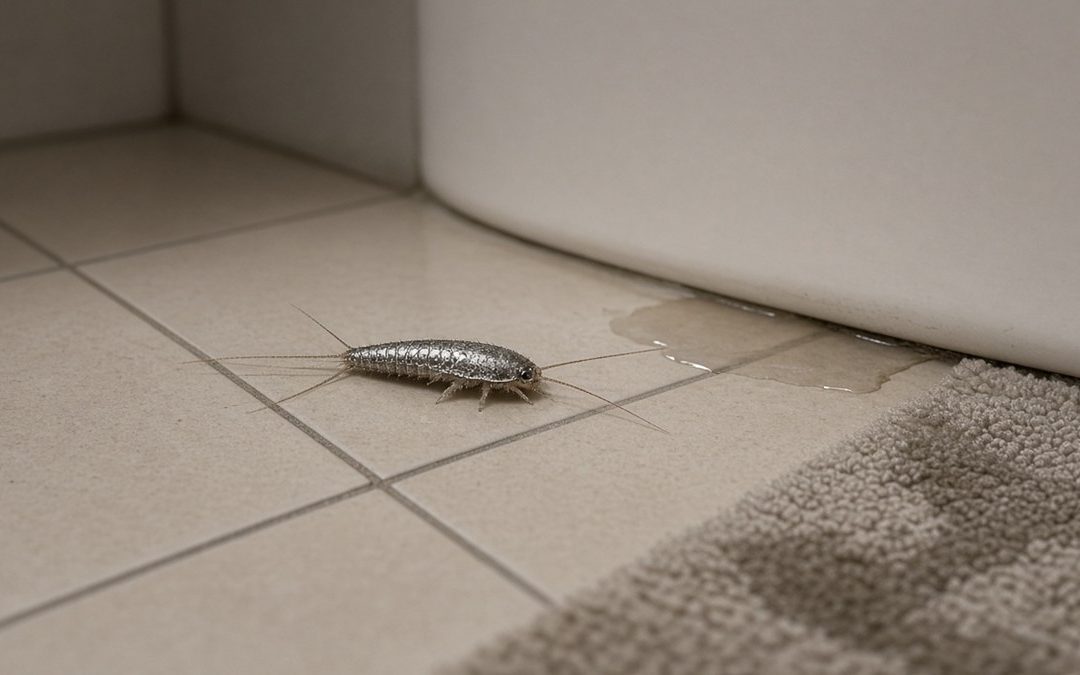
You turn on the bathroom light late at night and something silver and wiggly darts under the tub. That’s a silverfish. If you’re finding silverfish in the bathroom in Santa Clara, it can seem strange. We live in the desert, after all. But your bathroom isn’t the desert. It’s the most humid room in the house, and that’s exactly what silverfish are looking for. Here’s what draws them in, how to make the bathroom less inviting, and when to get help. This applies in Ivins, St. George, and Kayenta too.
What silverfish are
Silverfish are small, wingless insects, usually under an inch long, with a silvery-gray, carrot-shaped body, long antennae, and three bristle-like tails. They move fast, in a wiggling way that reminds people of a fish. They’re active at night and hide during the day in cracks and dark, damp spots.
They don’t bite people and aren’t known to spread disease. The problem is what they eat. Silverfish feed on starchy things: paper, cardboard, book bindings, wallpaper paste, glue, some fabrics, and crumbs. In large numbers, they can damage stored papers, books, and clothing.
Why Silverfish in the Bathroom Are So Common
Silverfish need moisture to survive. Southern Utah’s air is dry most of the year, so they seek out the damp spots inside our homes. Bathrooms check every box:
- Steam from showers and baths that doesn’t clear out.
- Slow leaks under sinks, around toilets, and at tub drains.
- Gaps in caulk and grout around the tub and shower, where water gets behind the tile.
- Damp bath mats, towels, and cardboard rolls from toilet paper.
- Dark spaces under the sink and behind the toilet.
Winter makes it worse in some homes. Windows stay shut, showers run hotter and longer, and the fan doesn’t always get used. Moisture builds up, and silverfish follow it.
Newer homes aren’t immune either. A bathroom with a fan that’s undersized, vented poorly, or just never switched on can stay damp for hours after every shower. That’s plenty for silverfish.
Signs you have silverfish
- Seeing them at night in tubs, sinks, or on the floor near the tub.
- Small holes or chewed edges on paper, cardboard, or wallpaper.
- Yellowish stains or tiny pepper-like droppings in cabinets or on stored items.
- Shed skins in drawers or along baseboards.
Seeing them in the tub doesn’t mean they came up the drain. Usually they fell in while looking for water and can’t climb the slick sides back out.
How to dry out the room and drive them off
Start with moisture. If you dry the room out, you take away the main reason they’re there.
- Run the exhaust fan during every shower and for a while after. If your fan is weak or broken, fix it.
- Crack a window or leave the door open after showering when you can.
- Fix leaks under the sink, around the toilet base, and at the tub.
- Re-caulk and re-grout gaps around the tub, shower, sink, and baseboards. That closes hiding spots and stops water getting into the wall.
- Hang towels and bath mats to dry instead of leaving them in a pile.
- Clear out cardboard and paper stored under the sink. Use plastic bins.
- Vacuum and wipe baseboards, corners, and under the vanity to remove crumbs, hair, and debris.

Damp spots that draw silverfish also draw other pests, especially cockroaches. If you’re seeing both, read our post on cockroaches in winter for the hiding spots they share.
Don’t forget the rest of the house
Silverfish in the bathroom can be a sign they’re elsewhere too. Check:
- Laundry rooms and areas around the water heater.
- Kitchen sink cabinets.
- Closets and garages with stored boxes, books, or papers.
- Attics, where they may feed on cardboard and insulation backing.
If you keep important papers, photos, or books in a closet or garage, move them into sealed plastic bins. That protects them and takes away food at the same time.
When to call for help
If you’ve dried things out and you’re still seeing them, or you’re finding them in several rooms, it’s time for a professional treatment. Our general pest control service includes crack-and-crevice treatment and interior treatment on request, targeted at baseboards, plumbing gaps, and the spots silverfish hide. We’ll also point out moisture problems we notice during the visit.
We use EPA-registered “Caution” label products that are safe for kids and pets once dry, typically about 30 minutes. No contracts. Family-owned since 2003. Call in the morning and we can often get out the same day.
Tired of silverfish in the tub? Call Bug Blasters: Utah (435) 229-7701 | Nevada (702) 350-2320.
Frequently asked questions
Why do I have silverfish in my bathroom?
Silverfish need moisture, and bathrooms are the most humid room in most homes. Steam, slow leaks, gaps in caulk, and damp towels or cardboard give them what they need.
Are silverfish harmful?
They don’t bite people and aren’t known to spread disease. In large numbers, they can damage paper, books, wallpaper, and some fabrics.
Do silverfish come up through the drain?
Usually not. They often fall into tubs and sinks while looking for water and can’t climb the slick sides back out.
What’s the fastest way to reduce silverfish?
Cut the moisture. Run the exhaust fan, fix leaks, re-caulk gaps, and hang towels to dry. Then clear out cardboard and paper they can feed on.
Do you treat for silverfish in Santa Clara?
Yes. Our general pest control service covers Santa Clara, Ivins, Kayenta, St. George, and the rest of Washington County. Call Utah (435) 229-7701 | Nevada (702) 350-2320.