Parowan winters are cold, and when the temperature drops, mice look for warm, quiet space. The attic is about as quiet as a house gets. If you’re hearing light scratching overhead at night, or you just have a feeling something’s up there, here are the signs of mice in the attic to look for, how they get up there, and what to do next. This applies just as much in Cedar City, Enoch, and Kanarraville.
Signs of Mice in the Attic
Mice are nocturnal and avoid people, so most attic problems are found by evidence, not sightings. Here’s what to look and listen for.
Sounds
- Light scratching, scurrying, or rustling in the ceiling, usually at night.
- Noise that picks up around dawn and dusk.
- Squeaking or chewing sounds inside a wall that runs up to the attic.
Things you’ll see
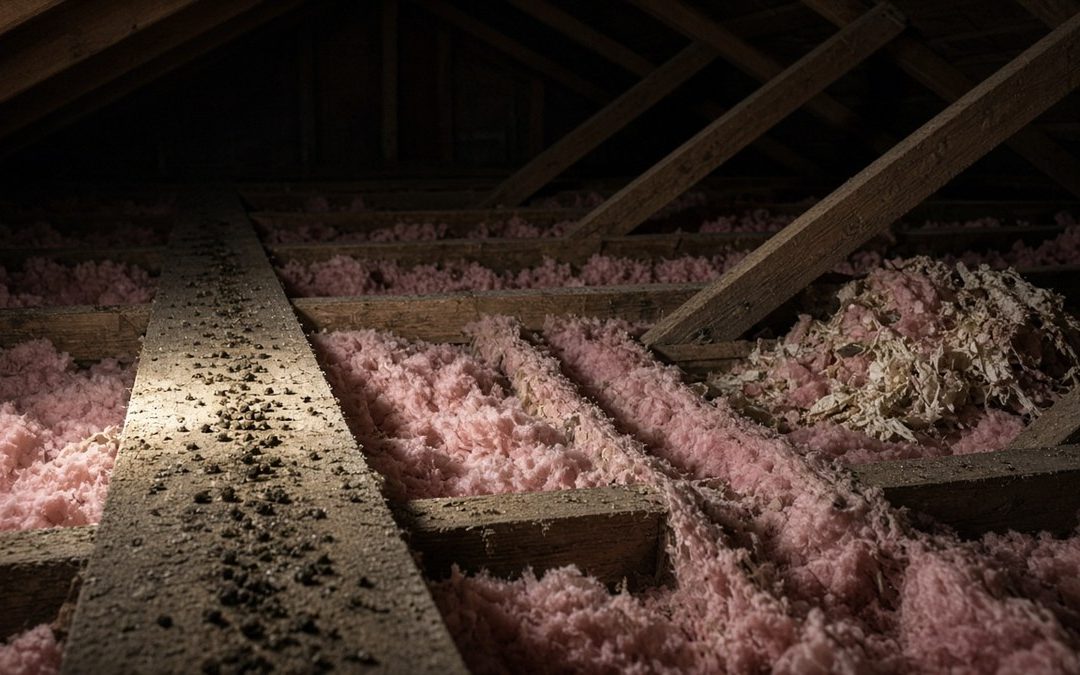
- Droppings. Small, dark, rice-sized pellets on joists, on top of insulation, along the edges near the eaves, or on stored boxes.
- Tunnels and trails pressed through the insulation, or insulation that’s been flattened, pulled up, or scattered.
- Nesting material. Shredded paper, fabric, cardboard, or insulation bunched up in a corner or inside a box.
- Gnaw marks on wood, stored items, ductwork, and electrical wiring.
- Greasy rub marks along beams or around holes, from their bodies brushing the same path over and over.
Other clues
- A musty, ammonia-like smell from urine.
- Pets staring at the ceiling or a wall.
- Droppings in the garage, the pantry, or under sinks. Mice in the attic often travel through the walls to reach food lower in the house.
How mice get into the attic
A house mouse can squeeze through a hole the size of a dime, and they climb better than most people expect. Common routes up high include:
- Gable vents and roof vents with torn, loose, or missing screens.
- Gaps where the roof meets the fascia or soffit.
- Openings around plumbing vents, utility lines, and A/C lines.
- Gaps inside the walls from the garage or crawl space that run up to the attic.
- Tree branches touching the roof.
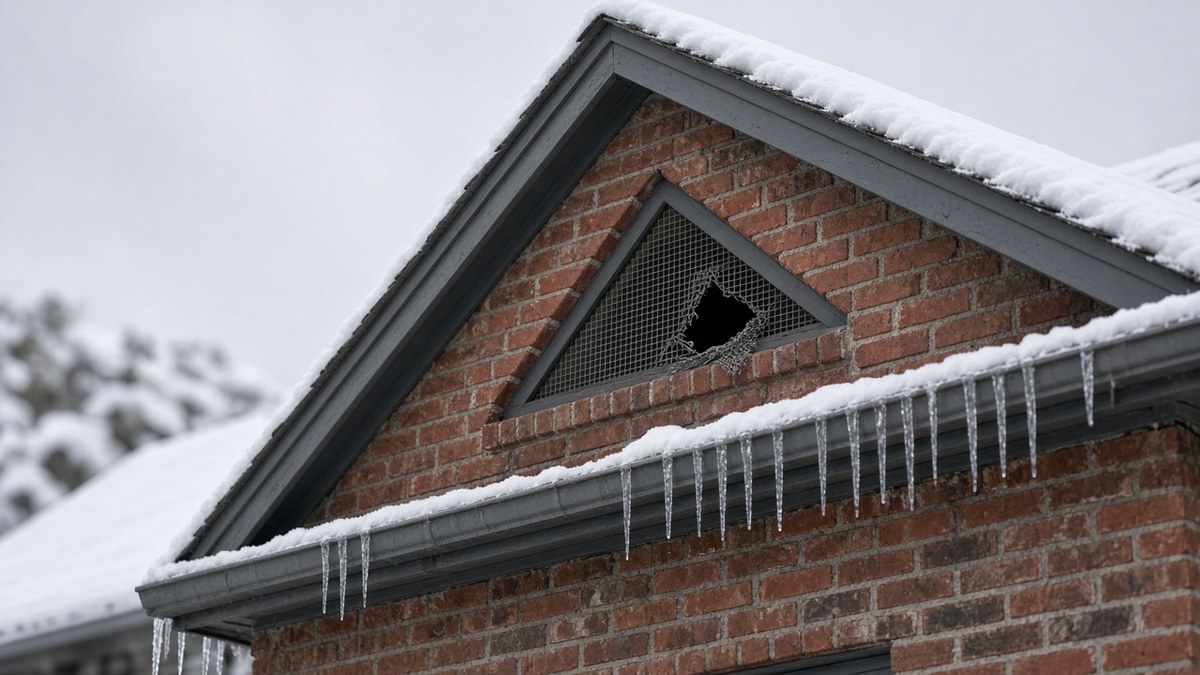
Older homes tend to have more of these openings simply because materials shrink, crack, and wear over time. If you’re seeing noise overhead and the damage looks bigger than a mouse could do, read our post on roof rats in St. George; rats live up high too.
Why attic mice are a real problem
Mice in the attic aren’t just noise. They chew electrical wiring, which is a fire risk. They tunnel through and soil insulation, which can mean replacing it. And their droppings and urine can carry disease, including hantavirus and salmonella. They also breed fast, so a couple of mice in November can be a lot more by spring.
The longer they stay, the more they spread out. A nest in the attic can lead to mice in the walls, the garage, and eventually the kitchen. Catching it early is cheaper, cleaner, and a lot less stressful than waiting until you see one run across the floor.
What to do if you find signs
- Don’t stir it up. Don’t sweep or vacuum dry droppings or nesting material. That puts dust in the air.
- Protect yourself. Wear gloves, and if you need to clean a spot, wet it with disinfectant first, let it soak, then wipe up and bag it.
- Find the way in. Look at vents, eaves, and roofline gaps from outside. Look for light coming through from inside the attic.
- Cut off food below. Seal pantry food and pet food, and clean up the garage.
- Get it inspected if you’ve found droppings, tunnels, or chewed wires. An attic with insulation, wiring, and tight spaces is not the easiest place to do this yourself.
If anyone in the house becomes ill and you think it could be connected to rodent droppings, talk to a doctor.
How we handle mice in the attic
Our rodent control work includes inspection and treatment of attics and crawl spaces. We find where the mice are nesting and traveling, set traps along those routes, and seal the entry points with rodent-proof materials like steel wool, metal flashing, expanding foam, and hardware cloth. Then we follow up to check traps and make sure the exclusion work is holding.
We serve Parowan and the rest of Iron County. We’re family-owned, here since 2003, and we don’t do contracts. Call in the morning and same-day service is often available.
Hearing something overhead? Call Bug Blasters: Utah (435) 229-7701 | Nevada (702) 350-2320.
Frequently asked questions
What do mice in the attic sound like?
Usually light scratching, scurrying, or rustling, mostly at night and around dawn and dusk. Heavier thumping can point to rats instead of mice.
What do mouse droppings in the attic look like?
Small, dark pellets about the size of a grain of rice, often along joists, near the eaves, on top of insulation, or around stored boxes.
Can I clean up mouse droppings in the attic myself?
If it’s a small area, wear gloves, don’t sweep or vacuum dry droppings, and wet them with disinfectant before wiping them up. For larger messes or soiled insulation, have a professional look first.
How do mice get into an attic?
Through torn vent screens, gaps at the roofline, openings around pipes and utility lines, and gaps inside walls that connect to the attic. A mouse can fit through a hole the size of a dime.
Do you serve Parowan?
Yes. We serve Parowan, Cedar City, Enoch, and the rest of Iron County. Call Utah (435) 229-7701 | Nevada (702) 350-2320.