
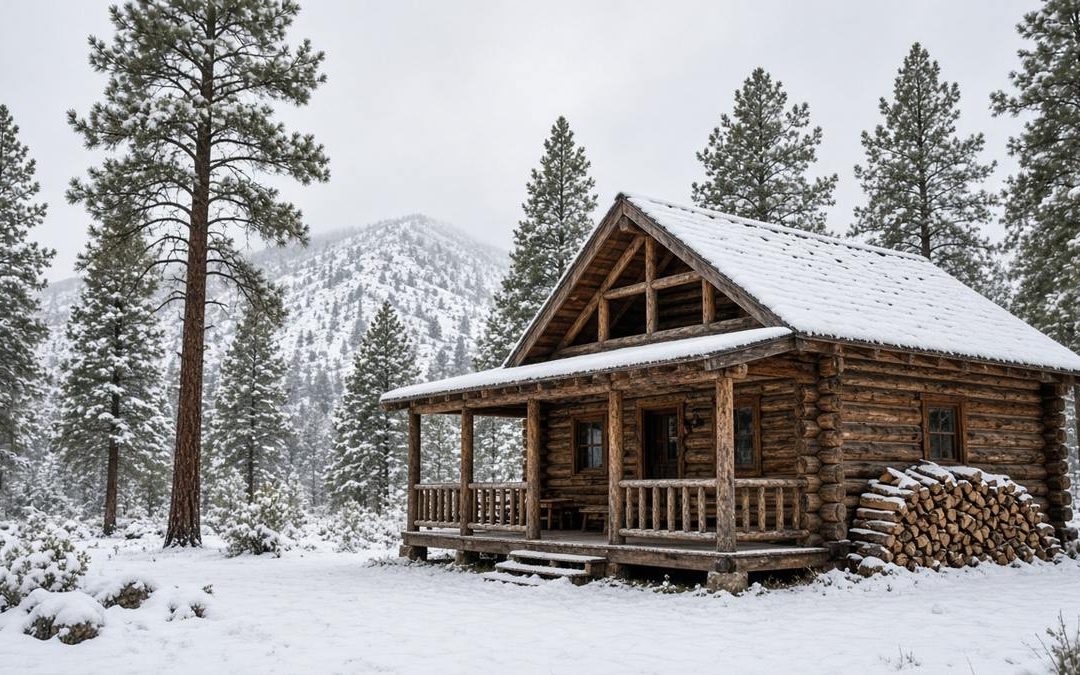
You open the cabin door after a few months away, and the first thing you notice is the smell. Then the droppings on the counter, the chewed corner of the couch cushion, and a nest in the bottom drawer. Pests in mountain cabins are a fact of life up in Pine Valley, and mice are at the top of the list. A cabin that sits empty in the cold, surrounded by pines, is an easy place for them to move in. Here’s how to close up right, what to check when you return, and how to clean up safely. This goes for places around Veyo, Dammeron Valley, and Central too.
Why cabins are such easy targets
- Cold winters. Rodents move indoors for warmth, and a cabin is the warmest shelter around.
- Long stretches with nobody there. No noise, no traffic, no one noticing a problem until it’s big.
- Lots of gaps. Log walls shift and check, foundations settle, and older cabins have more openings than most homes.
- Food and nesting material left behind. Pantry staples, bedding, couch cushions, and paper goods.
- Woods right up to the walls. Woodpiles, brush, and pine needles give rodents cover all the way to the door.
A house mouse can squeeze through a hole the size of a dime. A cabin doesn’t need a big gap to have a big problem.
Pests in Mountain Cabins: What You’ll Usually Find
- Mice. The most common problem by far. They nest in drawers, mattresses, wall voids, under appliances, and in stored linens.
- Rats. Less common, but bigger damage when they show up.
- Spiders. Webs in corners, under the porch, and in the woodpile. Black widows like dark, undisturbed places, so use gloves when you move firewood or stored items.
- Insects that overwinter in walls and attics and show up on windows on warm days.
Closing up the cabin
Food and kitchen
- Take food home, or store it in airtight metal or glass containers. Mice chew through cardboard and thin plastic.
- Don’t leave pet food, bird seed, or open bags behind.
- Clean behind and under the stove and fridge, and wipe the counters and cabinets.
- Take out every bit of trash.
Bedding and soft goods
- Store linens, blankets, and pillows in lidded plastic bins.
- Cover mattresses or store them off the floor if you can.
- Don’t leave paper towels, napkins, or tissues where mice can shred them.
Seal the gaps
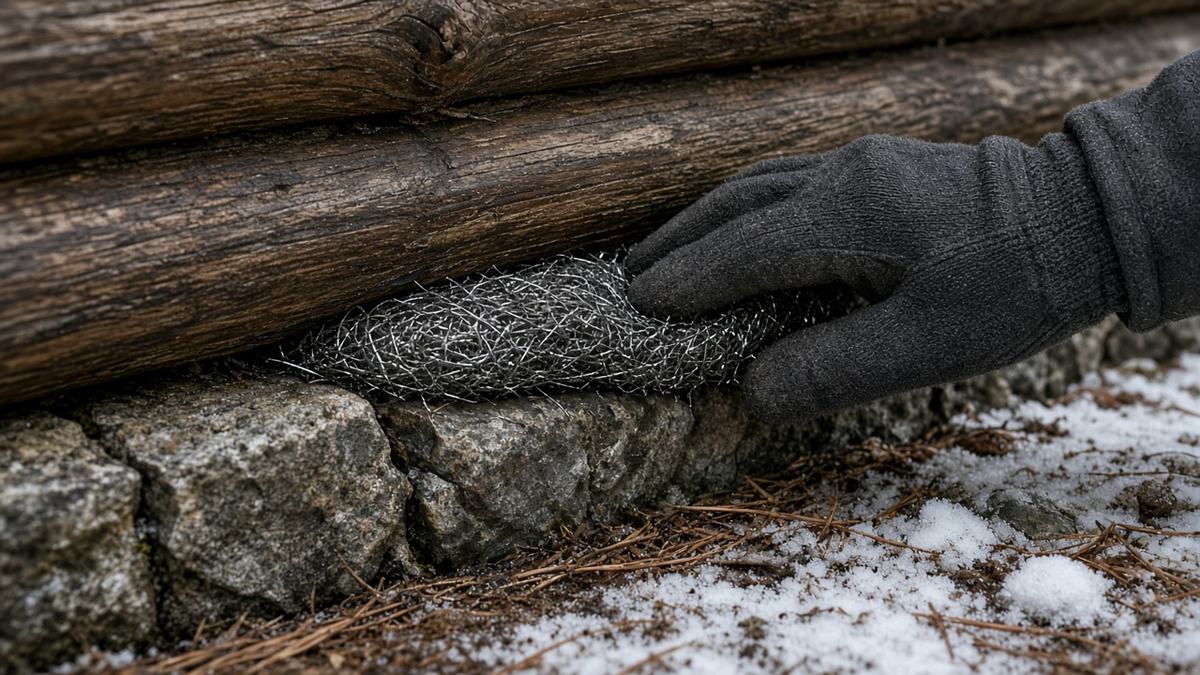
- Check where the logs or siding meet the foundation.
- Look around pipes, wires, and vents.
- Add door sweeps and tight weatherstripping.
- Make sure the chimney has a cap and vents have screens.
- Pack small holes with coarse steel wool and seal over it. Use hardware cloth or metal flashing for larger openings.
Outside
- Move firewood and brush away from the walls.
- Clear pine needles and debris from around the foundation and under the porch.
A lot of this is the same as closing up a house in town. Our post on how to keep mice out of your house in winter covers the most common entry points in more detail.
Opening the cabin back up safely
This part matters. Rodents can carry diseases, including hantavirus, through their droppings, urine, and nesting material. When you open up a cabin that’s been closed for months:
- Air it out first. Open doors and windows and let the cabin ventilate for a while before you start cleaning.
- Don’t sweep or vacuum dry droppings or nests. That puts dust in the air.
- Wear gloves. Wet droppings and nesting material with disinfectant, let it soak, then wipe it up and bag it.
- Wash bedding and fabrics that mice may have been in.
- Wash your hands well when you’re done.
If anyone gets sick after cleaning and you think it could be tied to rodents, see a doctor and tell them about the exposure.
When to call a professional
If you open up to droppings every season, or you can’t find how they’re getting in, it’s time for an inspection. Our rodent control work starts with finding the entry points, nesting areas, and food sources. We set traps and tamper-resistant bait stations where they fit, and we seal gaps with rodent-proof materials like steel wool, metal flashing, expanding foam, and hardware cloth. Then we follow up to make sure the exclusion is holding.
We serve Pine Valley and the rest of Washington County. Family-owned since 2003. No contracts.
Want the cabin rodent-free next time you open the door? Call Bug Blasters: Utah (435) 229-7701 | Nevada (702) 350-2320.
Frequently asked questions
What are the most common pests in mountain cabins?
Mice are the most common by far. Rats, spiders, and overwintering insects also show up, especially in cabins that sit empty for long stretches.
How do mice get into a cabin?
Through gaps where logs or siding meet the foundation, around pipes and vents, under doors, and through uncapped chimneys. A mouse can fit through a hole the size of a dime.
How should I clean up mouse droppings in a cabin?
Air the cabin out first, wear gloves, and don’t sweep or vacuum dry droppings. Wet them with disinfectant, let it soak, then wipe up and bag everything.
What’s the best way to close up a cabin for winter?
Remove food and trash, store bedding in sealed bins, seal gaps and cap the chimney, and move firewood and brush away from the walls.
Do you serve Pine Valley?
Yes. We serve Pine Valley, Veyo, Dammeron Valley, Central, and the rest of Washington County. Call Utah (435) 229-7701 | Nevada (702) 350-2320.