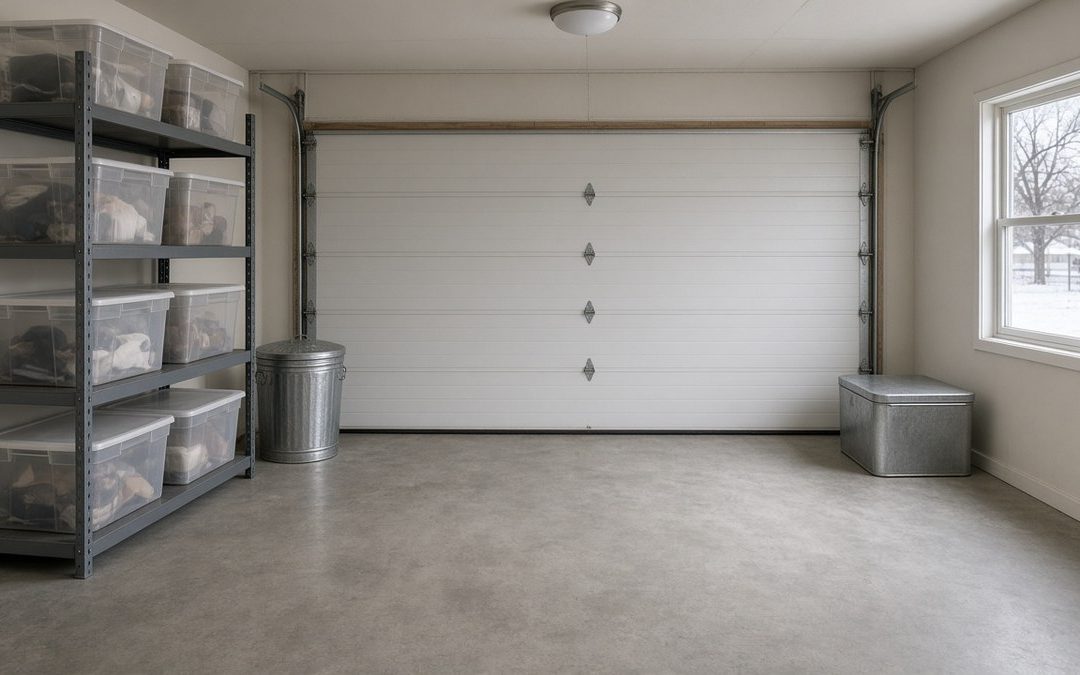
In Enoch, the garage is usually the first place mice show up when it gets cold. It’s attached to the house, it’s full of boxes and stored food, and the door rarely seals as tight as you think. If you want to know how to rodent proof your garage, start with this: a mouse can fit through a hole the size of a dime, and a rat needs about a quarter. Every gap that size is a door. The same steps work in Cedar City, Parowan, and Kanarraville.
Why the garage is the weak spot
Iron County winters get cold, and rodents move indoors for warmth. A garage gives them shelter without much traffic, plenty of cardboard to nest in, and often a bag of dog food or bird seed on the floor. From there it’s a short trip through the door into the house, or up into the walls and attic.
Garages in Enoch and the rest of the area see a lot of the same problems: worn bottom seals, side doors with daylight underneath, gaps around water lines and electrical, and storage stacked against the walls where mice can travel unseen.
How to Rodent Proof Your Garage: Seal the Gaps
Do this walk-through with a flashlight, ideally at dusk with the garage lights off and daylight still outside. Anywhere you see light coming in, a mouse can get in.
- The big door’s bottom seal. If the rubber is cracked, flattened, or chewed, or there’s a gap where the slab dips, replace it. Check the corners where the door meets the frame.
- The side weatherstripping along the door jambs. Gaps at the bottom corners are common entry points.
- The side or back door. Add a door sweep and tighten the weatherstripping.
- The door from the garage into the house. This is your last line. It should seal like an exterior door.
- Pipes, wires, and lines coming through the walls: water heater lines, the water softener, A/C lines, and electrical.
- Dryer vents and wall vents. Make sure they have intact covers or screens.
- Cracks in the slab edge or foundation, and gaps where the drywall meets the floor.
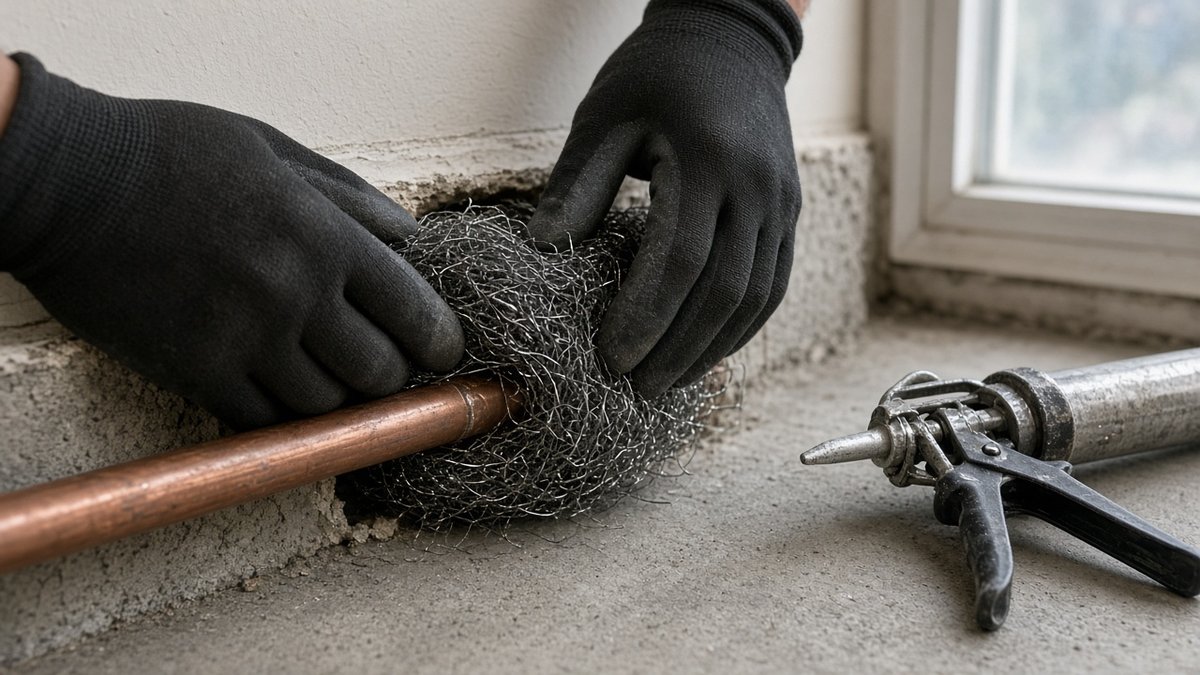
For small holes, pack coarse steel wool in tight and seal over it with caulk or foam so it can’t be pulled out. For bigger openings, use hardware cloth or metal flashing. Plain foam or caulk by itself can be chewed through.
Stop feeding them
A sealed garage still gets tested if there’s food inside. Fix the storage:
- Pet food, bird seed, grass seed, and livestock feed go in sealed metal or heavy plastic containers with tight lids.
- Keep trash and recycling in lidded cans, and rinse food containers before they go in the bin.
- Don’t store pantry overflow or emergency food in cardboard on the floor.
- Clean up spilled seed and crumbs, especially around the freezer or the spot where you feed the dog.
Take away their cover
Mice like to travel along walls, under things. Give them nowhere to hide:
- Move storage onto shelves, off the floor, and a few inches away from the walls.
- Switch cardboard boxes to lidded plastic bins. Cardboard is nesting material.
- Clear out piles of rags, old insulation, and junk.
- Outside, pull woodpiles, brush, and clutter away from the garage walls.
Watch for signs they’ve already moved in
Look for droppings along the walls and behind stored items, gnaw marks on boxes and bags, shredded paper or insulation, and greasy rub marks along the base of the walls. Check the car, too; a warm engine is a favorite nest spot. If you find droppings, don’t sweep them dry. Wear gloves, wet them with disinfectant, then wipe them up.
If you’re also seeing signs inside the house, our post on how to keep mice out of your house in winter walks through the rest of the home.
When to bring in help
Sealing a garage is very doable for most homeowners. But if mice keep coming back, or you can’t find how they’re getting in, a second set of eyes helps. Our rodent control process is inspection, trapping, and exclusion. We find the entry points, set traps and bait stations along the routes they’re actually using, and seal the gaps with rodent-proof materials like steel wool, metal flashing, expanding foam, and hardware cloth. Garage doors and utility gaps are a big part of that work.
We serve Enoch and the rest of Iron County. Family-owned since 2003, no contracts, and if you call in the morning we can often come out the same day.
Ready to shut the garage down for winter? Call Bug Blasters: Utah (435) 229-7701 | Nevada (702) 350-2320.
Frequently asked questions
What’s the most common way mice get into a garage?
Worn or gapped garage-door seals, gaps at the bottom corners of the door frame, and openings around pipes and utility lines. A mouse can fit through a hole the size of a dime.
What should I use to seal holes in my garage?
Pack small holes with coarse steel wool and seal over it with caulk or foam. Use hardware cloth or metal flashing for larger openings. Foam or caulk alone can be chewed through.
Can I store pet food in the garage?
Yes, if it’s in a sealed metal or heavy plastic container with a tight lid. An open bag on the floor is one of the biggest draws for mice.
Do I still need traps if I seal the garage?
If mice are already inside, yes. Sealing keeps new ones out, and traps deal with the ones that are already there. The two work together.
Do you serve Enoch and Cedar City?
Yes. We provide rodent control in Enoch, Cedar City, Parowan, and the rest of Iron County. Call Utah (435) 229-7701 | Nevada (702) 350-2320.